
The evolution of poker in Italy: regulation, player community and international platforms
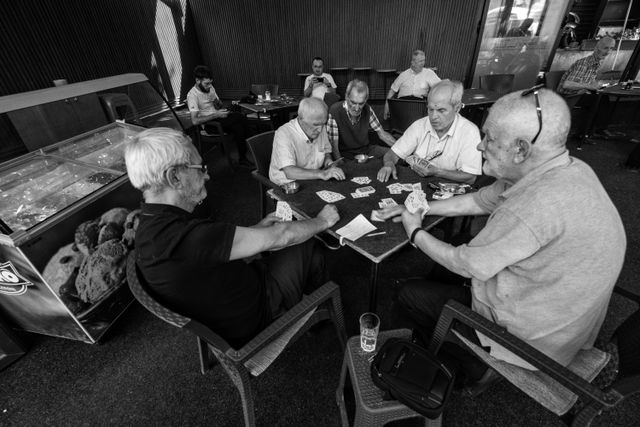
Italy is one of the largest gambling markets in Europe, with a gross gaming revenue of €21.6 billion in 2024, a figure that reflects a country with a deep and longstanding relationship with games of chance and skill. Among these, poker occupies a unique position. Recognised under Italian law as a game of skill, it has followed a distinct regulatory path compared to pure luck-based games, gradually moving from an unregulated pastime to a structured and tightly supervised activity.
Tracing the evolution of poker in Italy means following a series of legislative milestones, a competitive community of players who have made their mark internationally, and an ongoing tension between a restrictive domestic market and the broader world of online poker.
Poker in Italy: a game of skill with a strict legal framework
Italian law draws a clear distinction between games of pure chance and games where the outcome depends meaningfully on the player's decisions and skill. Poker falls firmly into the second category, and this classification has shaped every aspect of how the game has been regulated. Only operators holding a valid licence issued by the ADM (Italy's Customs and Monopolies Agency) are authorised to offer poker in any form. Organising cash games or tournaments outside of licensed environments is considered illegal under the Italian Criminal Code, with consequences ranging from administrative fines to criminal charges.
This strict framework applies equally to land-based and digital operators, making Italy one of the most tightly controlled poker markets on the continent. For online players specifically, the ADM system requires platforms to meet precise technical standards, use certified random number generators and maintain a direct connection to regulatory systems — requirements that significantly raise the barriers to entry for operators and shape the range of options available to players.
How poker regulation evolved in Italy
The current regulatory framework is not the result of a single piece of legislation but of a series of interventions that unfolded over nearly two decades. Each step significantly changed the conditions under which the game could be offered and played, both for operators and for individual players.
Key legislative milestones
Year: 2006
Legislation: Legge Bersani
Impact on poker: Market liberalisation, opening to foreign operators holding EU licences
Year: 2007
Legislation: Finance Act amendment
Impact on poker: Poker is officially recognised as a game of skill; tournaments are legalised
Year: 2011
Legislation: Ferragosto Decree
Impact on poker: Online cash game poker and online casino games are legalised
Year: 2018
Legislation: Decreto Dignità
Impact on poker: Complete ban on all forms of gambling advertising across every channel
Year: 2025
Legislation: ADM licence reform
Impact on poker: The number of authorised online operators reduced from 407 to 52
2011 was the most significant turning point for online poker specifically. Before that year, millions of Italians were playing on foreign platforms with no regulatory protection whatsoever. The Ferragosto Decree and subsequent implementing regulations introduced a licensed online poker market, requiring platforms to meet strict technical standards, use certified random number generators and maintain a direct connection to ADM systems.
The market grew rapidly in the years that followed, with online gross gaming revenue rising from approximately €400 million in 2012 to around €5 billion in 2024, driven by smartphone adoption and an expanding player base.
The 2025 licence reform and its consequences
November 2025 brought another structural shift. The previous system, which allowed more than 400 operators to hold licences at relatively low cost, was replaced by a far more selective regime. Only 52 concessions were awarded to 46 operators, each priced at €7 million for a nine-year term. Operators including Betway, Unibet and 1xBet chose not to renew their presence in the Italian market. The result is a more consolidated landscape dominated by large international groups such as Flutter, which controls both Sisal and PokerStars in Italy, and Lottomatica.
For poker players, this evolution has had a direct impact on the structure of the market, resulting in a smaller domestic player pool and a reduced variety of available platforms. In this context, those seeking a broader range of options tend to look beyond the ADM framework, turning to non-ADM poker operators active in the Italian market.
The live tournament scene: EPT Sanremo and the Italian Poker Tour
Italy has played a meaningful role in the development of live tournament poker in Europe. Between 2008 and 2014, Sanremo hosted regular stops on the European Poker Tour (EPT), the most prestigious live circuit in Europe, founded in 2004 by PokerStars. The presence of the EPT in Italy brought significant international visibility to the local scene, attracting professionals from across the world and establishing the country as a credible destination on the European poker map alongside Barcelona, Prague and Monte Carlo. Victoria Coren Mitchell made history at EPT Sanremo in 2014, becoming the first player to win two EPT Main Events.
In parallel, PokerStars launched the Italian Poker Tour (IPT) in 2009, a circuit dedicated specifically to the Italian market with stops across the country and in international venues such as Malta and Nova Gorica. The IPT gave many Italian players their first experience of organised live tournament poker at a serious level, effectively serving as a stepping stone toward the larger international circuits.
Non-ADM poker sites: what they are and why Italian players use them
Non-ADM poker sites are platforms that do not hold an Italian licence but may be authorised by other recognised European regulators, such as the Malta Gaming Authority (MGA), the UK Gambling Commission (UKGC) or equivalent bodies. Under Italian law, operating without an ADM licence constitutes an offence on the operator's side, but many of these platforms are subject to rigorous oversight in their own licensing jurisdictions. For Italian players, accessing these sites means operating outside the protections of the ADM framework, but in return, they gain access to conditions that the domestic regulated market rarely matches.
The reasons why a significant portion of Italian players look beyond the ADM market are practical and well documented:
- International player pool: non-ADM operators run on global networks with far more active players than any Italian-only platform. This translates into more tables running at all hours, a wider range of stakes and tournaments with larger guaranteed prize pools.
- Game variety: beyond Texas Hold'em, these operators frequently offer Pot-Limit Omaha, mixed games, short deck and other formats that are difficult or impossible to find on ADM-licensed sites.
- Rake structure: the fiscal pressure on the Italian market tends to be reflected in the conditions offered to players. Some international operators provide more competitive rake and more generous rakeback programmes.
- Bonuses and promotions: the 2018 Decreto Dignità banned all forms of gambling advertising in Italy, severely limiting the ability of ADM-licensed operators to offer welcome bonuses. Non-ADM sites are not subject to this restriction and can run more aggressive promotional offers.
Italian players on the world stage
Despite the structural constraints of the domestic market, Italian poker players have achieved results that place the country among the strongest in the world. Italy ranks ninth globally for WSOP bracelets won, with 24 titles, tied with Israel. This figure carries particular weight when set against the limited size of the regulated domestic player pool available to Italian grinders.
The players who defined Italian poker internationally
Dario Sammartino is Italy's all-time leading earner in live tournaments, with career winnings exceeding $17.4 million. He finished runner-up in the 2019 WSOP Main Event for a career-best $6 million and won his first bracelet in 2024, taking down the $2,500 mixed Omaha Eight-or-Better and Stud Eight-or-Better event.
Mustapha Kanit, born in Alessandria and raised professionally between private poker clubs and online platforms, has accumulated over $11.5 million in live tournament earnings, with major results at the EPT and the Aussie Millions.
Max Pescatori, known as "The Italian Pirate", holds four WSOP bracelets won in four different game variants, a record that speaks to an unusually broad technical range.
What these careers share is a common thread: all three built their development by playing on international platforms, where the volume of hands, the variety of formats and the quality of competition were simply not available within the ADM-regulated market.
A market that keeps changing
In just over two decades, poker in Italy has undergone a transformation from a largely unregulated activity to a sector monitored by one of the most demanding regulatory bodies in Europe. The 2025 reform has further concentrated the market, raising the barriers to entry and reducing the number of authorised operators significantly. For recreational players, the ADM system provides genuine guarantees in terms of fund security and game integrity. For those who play regularly and seek more competitive conditions, the structure of the Italian market continues to push toward alternative platforms. The track record of Italian professionals on the international stage makes clear that the talent has always been there. What has often been missing is a domestic environment capable of nurturing it at the highest level.